How to prepare for the «Hematocrit» test: rules for taking it
Hematocrit is the fraction of blood volume occupied by red blood cells. This indicator is part of the complete blood count and is especially important for people on testosterone therapy, for endurance athletes and for those who train in the mountains. However, hematocrit depends not only on the number of red blood cells but also on plasma volume, which changes within minutes. Our editorial team examines how to prepare for the test so as not to get a false «high hematocrit» due to ordinary dehydration or an incorrect posture.
What hematocrit is and why it «drifts»
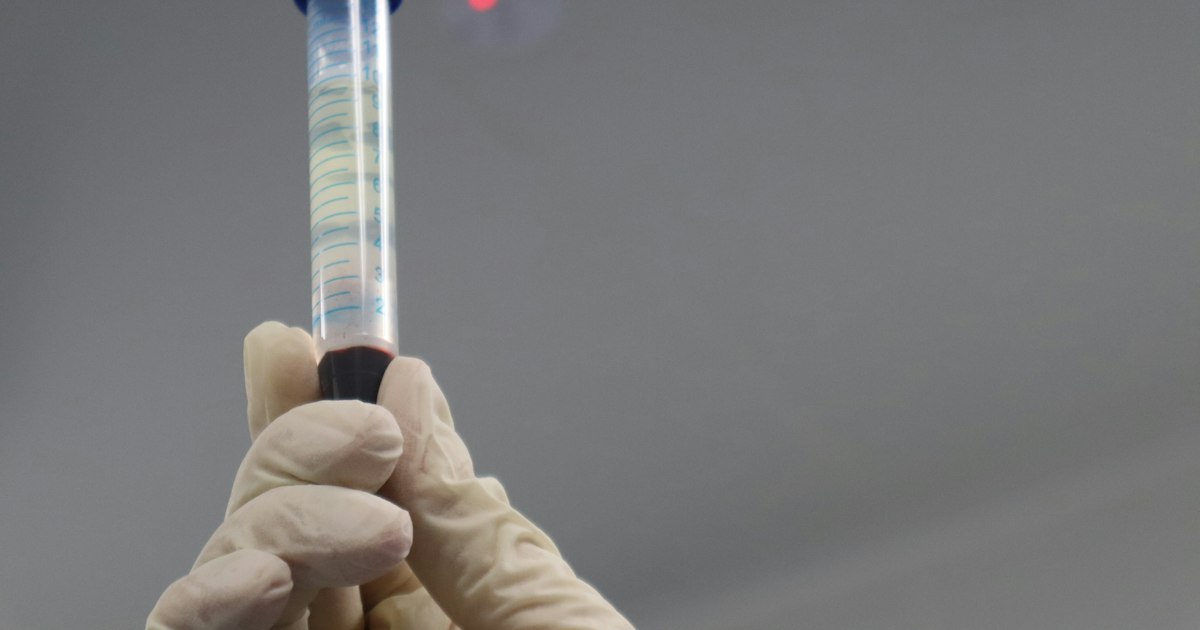
If a tube of blood is centrifuged, the red blood cells settle to the bottom, leaving yellowish plasma on top. The ratio of the height of the column of red blood cells to the total height is the hematocrit. Modern hematology analyzers do not centrifuge the blood but calculate the hematocrit from the number of red blood cells and their mean volume, but the essence of the indicator is the same.
Hematocrit is a ratio, that is, a fraction. Its numerator is the mass of red blood cells, which changes slowly, over weeks. The denominator is the total blood volume, a significant part of which is plasma, whose volume can decrease or increase within hours. That is why dehydration «thickens» the blood and raises the hematocrit, while an excess of fluid «dilutes» and lowers it, even though the number of red blood cells has not changed.
It is precisely because of this that hematocrit often leaves people baffled: today it is «high», in a week it is normal. The most common cause of such fluctuations is not disease but different collection conditions.
Guidance documents on preanalytics, in particular the joint EFLM and COLABIOCLI recommendation on venous blood collection (Simundic et al., 2018) and the CLSI GP41 standard, pay special attention to standardizing these conditions, because it is at the pre-laboratory stage that most errors arise.
Water, food, alcohol and the sauna
The simplest rule is to come to the test in a normal state of hydration. The day before, drink water as usual, and in the morning before the draw you may drink a glass of water. This will not dilute the blood excessively but will remove the consequences of not drinking enough overnight.
Alcohol in the evening beforehand acts as a diuretic and increases dehydration, so it is better to avoid it for at least a day. The same applies to the sauna, the bathhouse and a hot bath the evening before the test: intense sweating temporarily reduces plasma volume.
The complete blood count, which includes hematocrit, is usually taken on an empty stomach or a few hours after a light meal. For hematocrit itself, food intake is not critical, but a hearty fatty breakfast can affect other indicators and the quality of the sample, so laboratories advise coming on an empty stomach.
- your usual drinking regimen the day before, a glass of water in the morning;
- no alcohol for at least 24 hours;
- no sauna, bathhouse or prolonged exposure to heat the evening before;
- no diuretics «for cutting» — they sharply change plasma volume and are dangerous in themselves.
Let us mention smoking separately. In smokers hematocrit is on average higher, partly because of the effect of carbon monoxide on oxygen transport. It is beneficial to refrain from a cigarette before the test, although the chronic effect of smoking will not disappear in an hour.
Body position and draw technique
Few people know that even posture affects hematocrit. When moving from a lying to an upright position, part of the fluid leaves the vessels into the tissues of the legs, plasma volume decreases, and hematocrit rises. In a sitting position the effect is intermediate. The differences can amount to several percentage points — enough for a «borderline» result to cross the limit of normal.
That is why the standard procedure requires the patient to sit quietly for 10–15 minutes before the draw. For comparable results it is worth keeping to the same posture each time and not rushing up the stairs to the procedure room.
The second technical detail is the tourniquet. If it is held for longer than about a minute, fluid leaves the vein into the tissues while the cells remain, and the blood «thickens» locally. WHO guidance on blood collection and the EFLM recommendations advise removing the tourniquet as early as possible after blood begins to flow into the tube. It is also not advisable to clench and unclench the fist vigorously.
The tube for a complete blood count contains the anticoagulant EDTA and must be filled to the mark and mixed. A clot in the sample or prolonged storage before analysis can also distort the indicators — this is already the laboratory's responsibility, but it is useful to know about it.
Training, altitude and hormone therapy
Immediately after an intense workout, hematocrit rises because of fluid loss through sweat and plasma redistribution. In contrast, regular endurance training increases plasma volume over time, and in well-trained athletes hematocrit may be below average — the so-called «sports pseudoanemia» (Mairbäurl, 2013). That is why the test is not taken after a workout, and exhausting exertion is avoided the day before.
Being at altitude stimulates the production of erythropoietin and over time increases the red cell mass. After an altitude camp or training in a hypoxic tent, hematocrit may be physiologically elevated — the doctor should be told about this.
| Situation | Typical effect on hematocrit | Mechanism |
|---|---|---|
| Dehydration, sauna, alcohol | Increase | Reduction of plasma volume |
| Test right after a workout | Increase | Fluid loss, plasma redistribution |
| Regular endurance training | Moderate decrease | Increase in plasma volume |
| Altitude, hypoxia | Increase | Stimulation of erythropoiesis |
| Testosterone, anabolic steroids | Increase | Stimulation of erythropoiesis |
| Excessive infusion or fluid intake | Decrease | Dilution of the blood |
Testosterone and anabolic steroids stimulate the formation of red blood cells, and erythrocytosis is one of the most common side effects of androgens. The Endocrine Society clinical guideline (Bhasin et al., 2018) recommends monitoring hematocrit during replacement therapy and considers a level above 54% grounds for reviewing treatment. A high hematocrit increases blood viscosity and potentially the risk of thrombosis.
That is precisely why it is especially important for people on hormone therapy to give blood under the same rules. A false increase due to dehydration can lead to unnecessary changes in treatment, while a false «normal» obtained after drinking too much can conceal a real problem.
How to interpret the result
The reference intervals for hematocrit differ for men and women and depend on the laboratory. A single deviation, especially a small one, is usually asked by the doctor to be rechecked under standard conditions.
Hematocrit is assessed together with hemoglobin, the red blood cell count and the red cell indices. If all three indicators are elevated and the person is well hydrated, this is called erythrocytosis, the cause of which is investigated: smoking, sleep apnea, hormonal drugs, lung, heart or bone marrow disease.
A low hematocrit is more often associated with anemia — iron deficiency, blood loss, chronic diseases. But in an endurance athlete a moderate decrease may be the result of increased plasma volume, so other indicators, in particular ferritin, are also important.
In elite sport, hematology indicators are also tracked within the framework of the WADA Athlete Biological Passport. The collection procedures there are strictly standardized precisely because hematocrit and hemoglobin are sensitive to hydration, posture and exertion (Sottas et al., 2010).
Editorial conclusions
Hematocrit depends on plasma volume no less than on the number of red blood cells. Dehydration, sauna, alcohol, a workout before the test, a prolonged tourniquet and an upright posture can artificially raise it.
For the result to be comparable, come to the test rested, in a normal state of hydration, sit for 10–15 minutes before the procedure, and give blood at one laboratory at the same time of day.
People on testosterone therapy should pay especially close attention to hematocrit: regular monitoring under standard conditions is part of safe treatment under a doctor's supervision.
We also recommend reviewing our materials on preparing for the hemoglobin test, on monitoring ferritin in athletes and on the effect of androgens on blood indicators.
References
- Simundic AM, Bölenius K, Cadamuro J, et al. Joint EFLM-COLABIOCLI recommendation for venous blood sampling. Clin Chem Lab Med. 2018;56(12):2015–2038.
- Clinical and Laboratory Standards Institute. Collection of Diagnostic Venous Blood Specimens. 7th ed. CLSI standard GP41. Wayne, PA: CLSI; 2017.
- World Health Organization. WHO guidelines on drawing blood: best practices in phlebotomy. Geneva: WHO; 2010.
- Bhasin S, Brito JP, Cunningham GR, et al. Testosterone therapy in men with hypogonadism: an Endocrine Society clinical practice guideline. J Clin Endocrinol Metab. 2018;103(5):1715–1744.
- Mairbäurl H. Red blood cells in sports: effects of exercise and training on oxygen supply by red blood cells. Front Physiol. 2013;4:332.
- Sottas PE, Robinson N, Saugy M. The athlete's biological passport and indirect markers of blood doping. Handb Exp Pharmacol. 2010;(195):305–326.
Andriy Melnyk
A strength-sports coach and author of programs for beginner and intermediate levels. Writes about training planning.